Accessibility Isn’t Optional Anymore: It’s a Business and Legal Requirement
What accessibility means
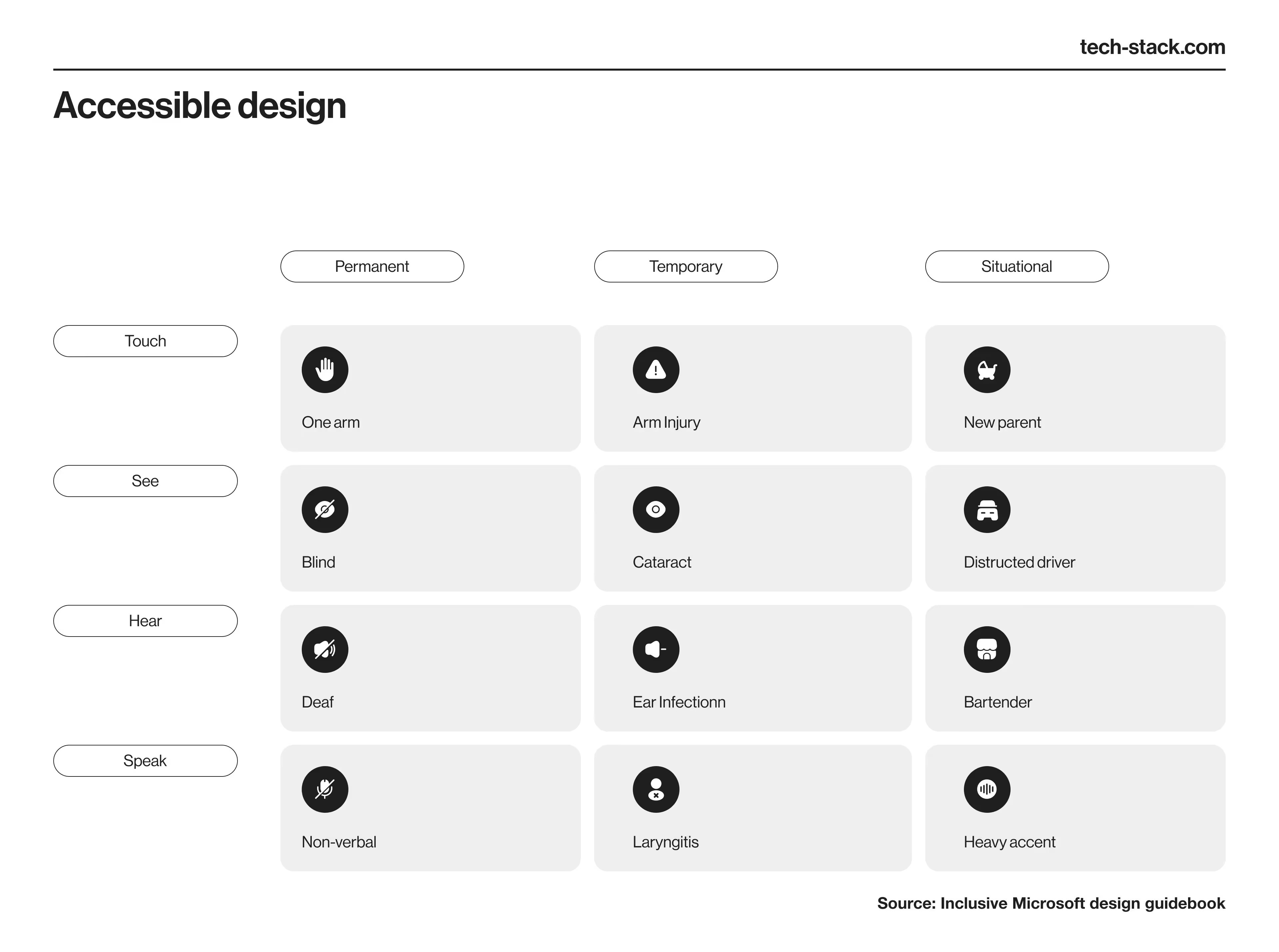
In the context of digital products, accessibility means designing and building experiences that people can perceive, understand, navigate, and use; regardless of ability, disability, or context.
This includes people with visual, auditory, motor, or cognitive impairments, as well as users dealing with temporary limitations, aging-related changes, or situational constraints like poor lighting, broken hardware, or high-stress environments.
In practice, accessibility is not a separate feature. It’s a measure of whether a product actually works for real people in the real world.
Why Accessibility Matters Now
Accessibility has moved out of the realm of best practices and into enforceable reality.
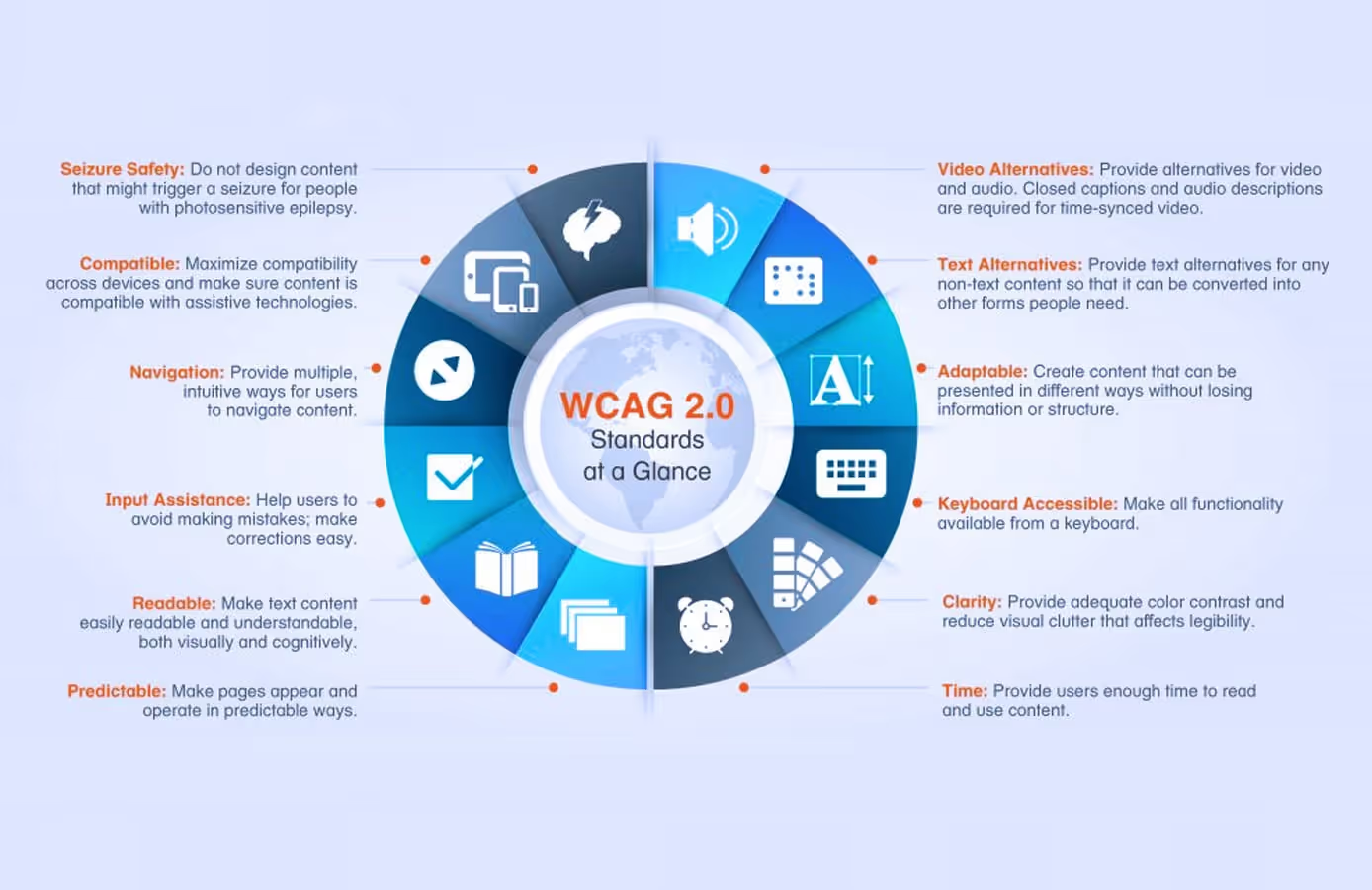
In the United States, digital experiences increasingly fall under the scope of the Americans with Disabilities Act, which courts have consistently interpreted to include websites and software. Most accessibility standards reference the Web Content Accessibility Guidelines, which define how digital products should support users with disabilities.
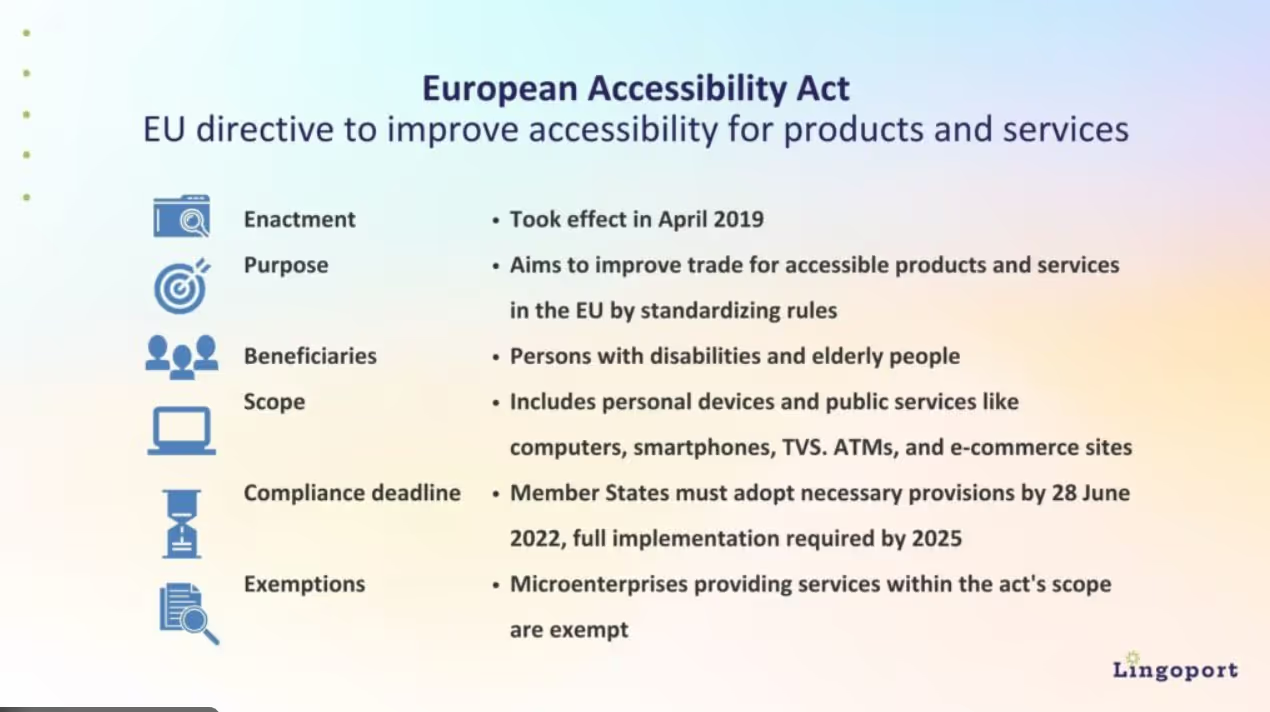
In the European Union, the European Accessibility Act expands these requirements further, affecting companies that operate or sell across borders.
Here’s the hard reality: in 2023, more than 4,600 digital accessibility lawsuits were filed in the U.S., and in the first half of 2025, 2,019 lawsuits were filed. At the current pace, 2025 is projected to exceed 2024.
Costs add up quickly. Settlements in digital ADA cases are often in the $5,000 to $50,000 range, with some reaching six figures, and DOJ civil penalty maximums under ADA Title III have been set at $75,000 for a first violation and $150,000 for subsequent violations.
This has direct business consequences:
Accessibility Lawsuit Reality Check
- 4,600+ digital accessibility lawsuits filed in the U.S. in 2023
- 2,000+ ADA web accessibility lawsuits already filed by mid-2025
- Settlements and legal costs often $5,000–$400,000+ per case
- Statutory penalties can reach $75,000 or more for violations
Accessibility isn’t theoretical, it’s enforceable risk.
- Accessibility is now reviewed during enterprise procurement
- Public-sector eligibility depends on compliance
- Global products must meet the highest common standard
- Legal exposure is routine, not hypothetical
Accessibility is no longer a future concern. It is a present constraint that directly affects revenue, growth, and risk.
Why Accessibility Efforts Fail
Most accessibility efforts fail not because teams lack tools, but because accessibility is treated as a technical afterthought instead of a design responsibility.
Common failure patterns:
- Accessibility addressed during QA instead of discovery
- No clear ownership across design, product, and engineering
- Over-reliance on automated audits
- Treating accessibility as compliance theater
In practice, most accessibility failures are organizational, not technical. When decision-making is unclear, accessibility is the first thing deprioritized.
Accessibility as a Product Maturity Signal
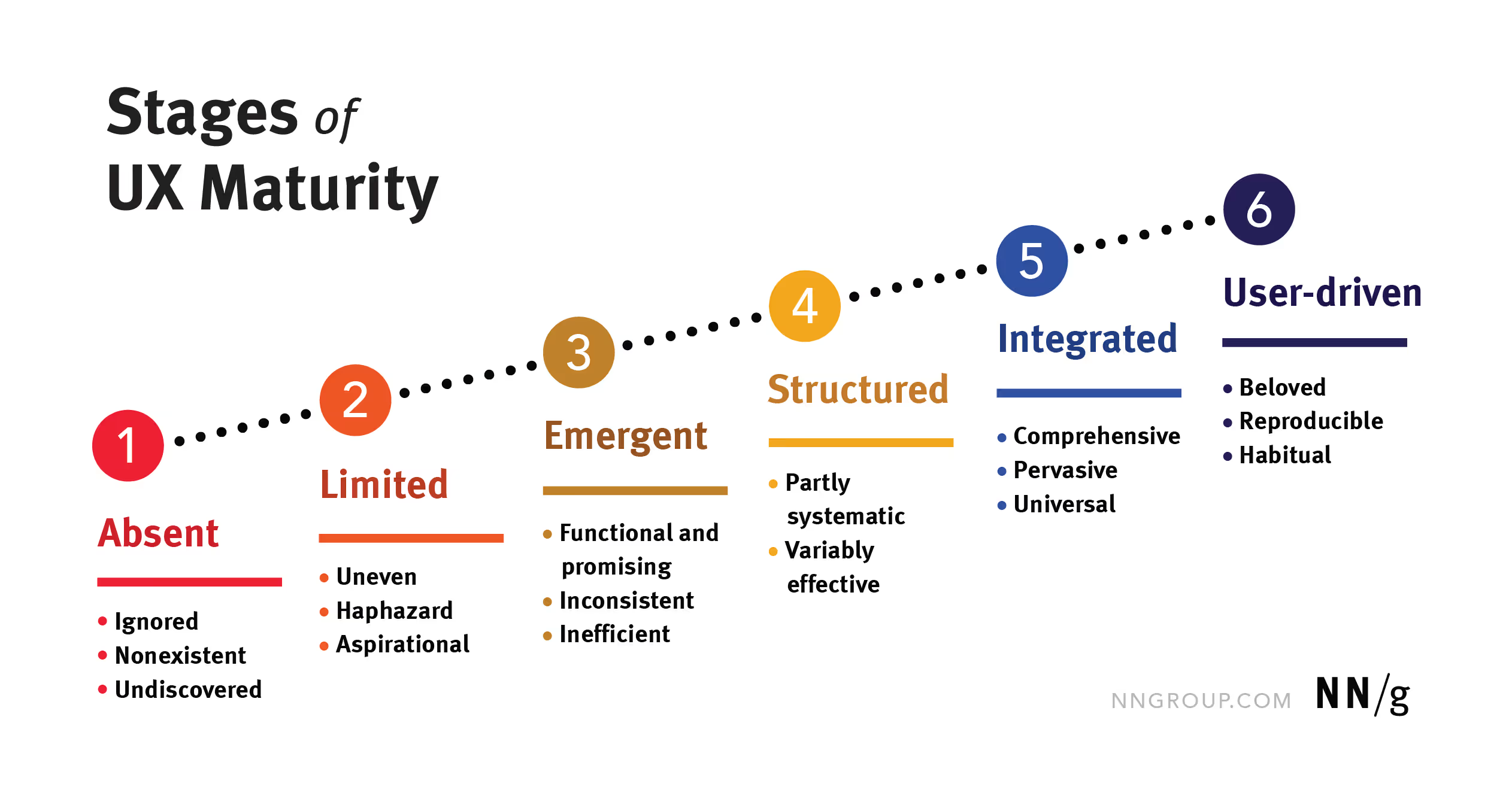
Accessibility is also a signal of product maturity.
Teams that design accessibly tend to:
- Create clearer information hierarchies
- Reduce user error
- Build more resilient systems
- Make better decisions under constraint
Accessibility correlates strongly with systems thinking, design leadership, and long-term product quality.
Designing Under Real-World Constraints
In regulated, public-facing products, failure has consequences. Users don’t have the luxury of workarounds.
In my work on public-sector mobility platforms, including projects like the Public Transport Console for UK Bus Drivers and Parking Terminal UX Enhancement, accessibility considerations directly shaped layout decisions, contrast systems, interaction models, and error handling. These weren’t compliance exercises, they were essential to ensuring the product could be used safely and reliably in real-world conditions.
You can see how these constraints shaped the design approach in my Flowbird Case Study
In these environments:

- Accessibility must be designed in, not added later
- Edge cases improve the core experience
- Standards inform decisions, but usability drives them
This is where accessibility stops being overhead and starts functioning as design discipline.
The Business Case for Accessibility
From a business perspective, accessibility delivers measurable value:
- Reduced legal exposure
- Faster enterprise sales
- Broader market reach
- Lower support costs
- Stronger brand trust
Accessibility isn’t a cost center — it’s risk management and product quality combined.
Organizations that invest early spend less fixing problems later — and avoid the reputational damage that comes with high-profile accessibility failures.
What Good Accessibility Actually Requires
Effective accessibility work doesn’t start with audits or tooling. It starts with how teams operate. Good accessibility practice means:
- Early integration into discovery and design
- Clear ownership and accountability
- Cross-functional collaboration
- Testing with real people, not just tools or AI
AI and automation can help — by flagging issues or accelerating reviews — but they don’t replace human judgment. Accessibility still requires accountability and context-aware design decisions.
Accessibility ≠ Feature — It’s Product Quality
Accessible products:
- Are easier to use
- Are easier to sell
- Are easier to maintain
- Perform better in enterprise and public-sector environments
Design for everyone, not just the average user.
Practical Takeaways
- Design for accessibility early, not at the end
- Use edge cases to improve the core
- Align accessibility goals with business outcomes
- Measure success by usability, not audit pass rates alone
Accessibility isn’t about perfection — it’s about intent, ownership, and follow-through.
Accessibility Is a Leadership Choice
Accessibility reflects whether an organization is willing to design for the real world, take responsibility for users, and build products that work at scale.
Accessibility isn’t optional anymore.
It’s a measure of whether a team is capable of building products that truly work.
Let's talk
Whether you’re exploring a new product, refining an experience, or interested in me becoming more permanently involved in your endevor, I’d love to connect. I bring experience across industries, mediums, and technologies, and I enjoy helping teams and individuals think through their most interesting design challenges.
Selected work
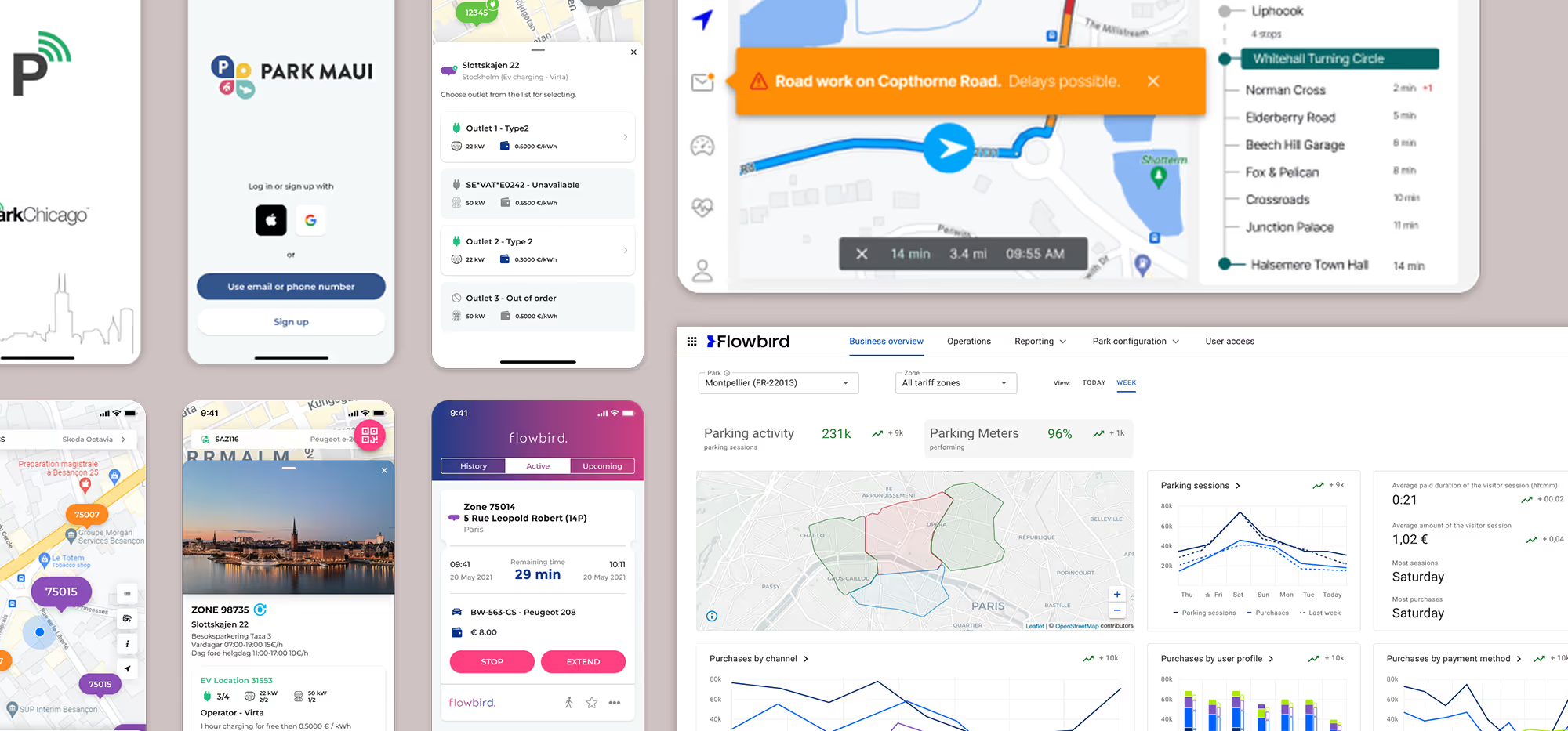
Flowbird: UX Maturity
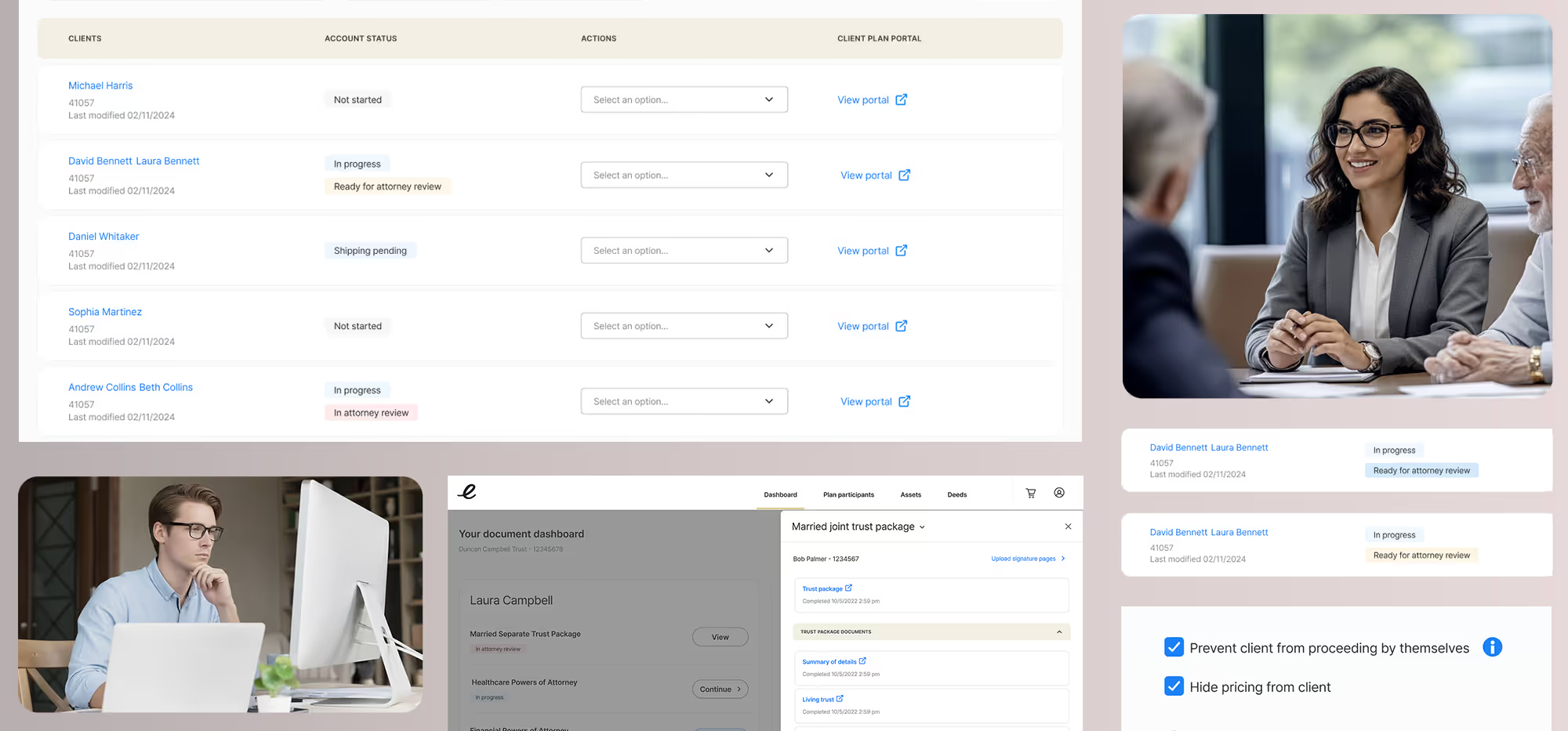
Estate Guru: Modernizing Estate Planning
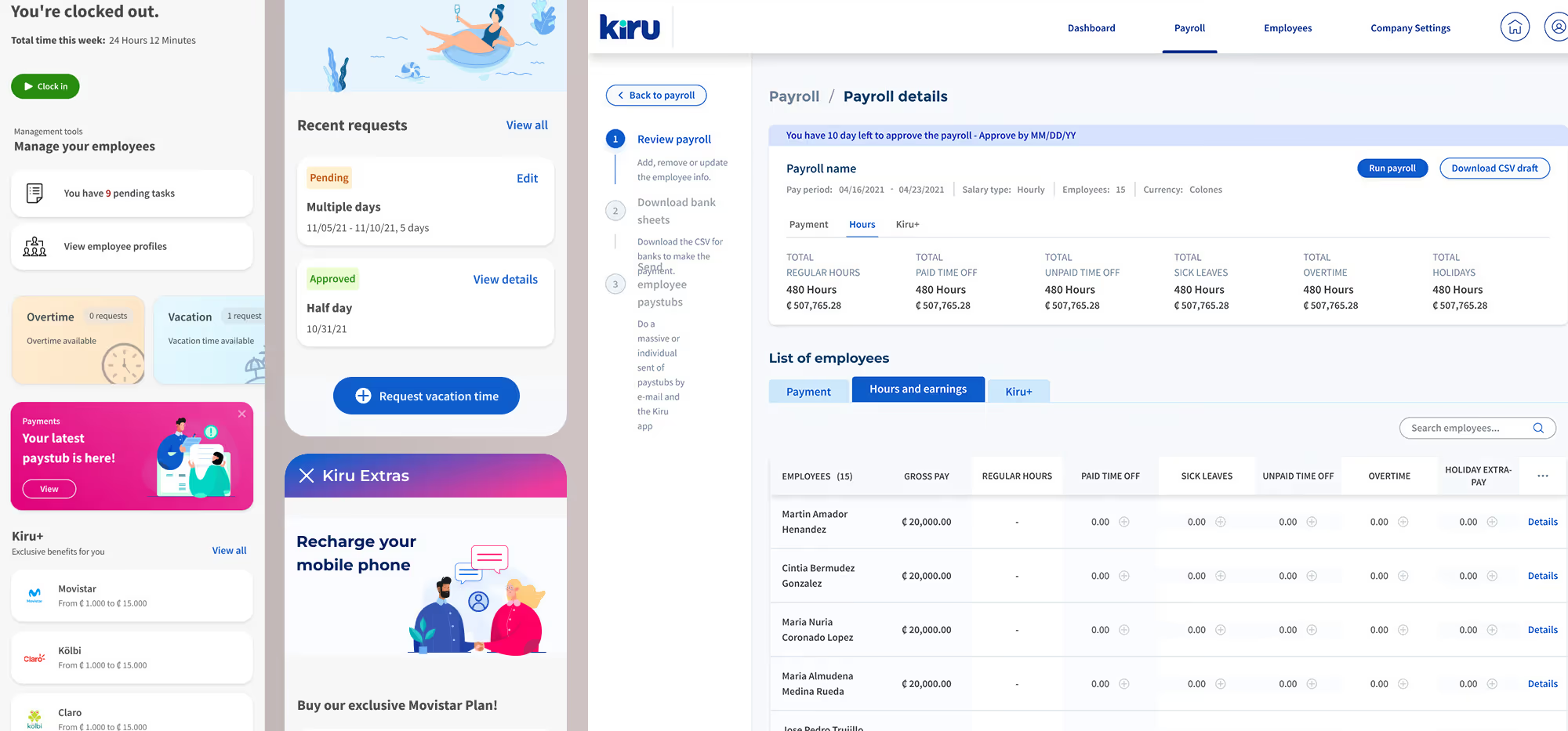
Kiru: A Payroll Startup

PayPal: Unified Card System
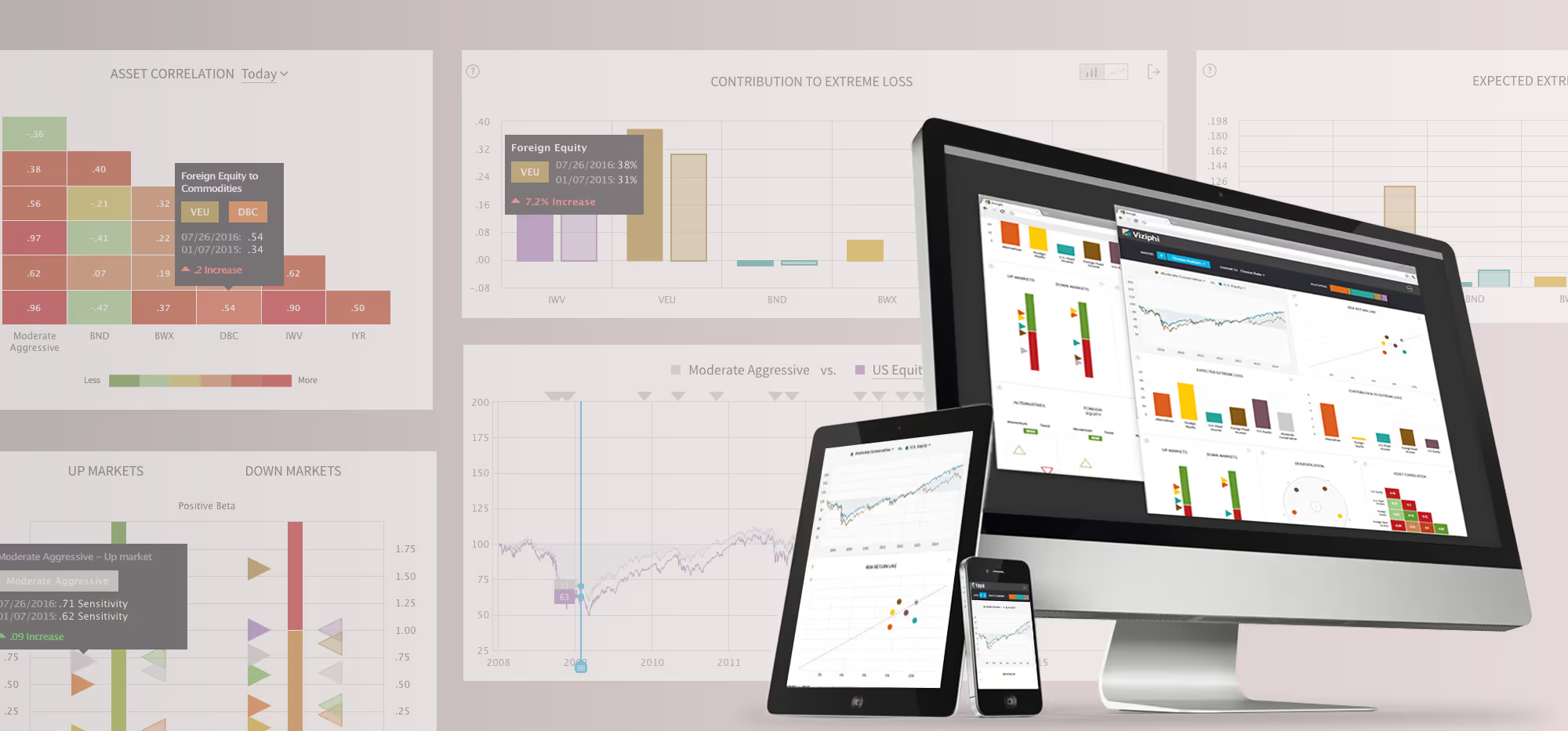
Viziphi: Visualizing Wealth
PayPal: Settings Redesign
RoleCall: A Platform for K-12 Staffing
