Designing for B2B, B2C, and B2B2C Without Breaking the Product
What B2B, B2C, and B2B2C Actually Mean in Practice
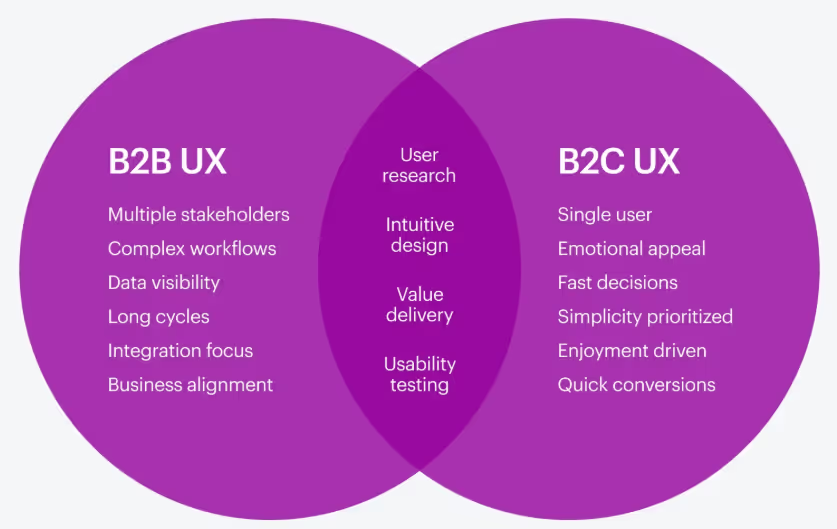
At a high level, these models emphasize different priorities.
- B2C experiences optimize for immediacy, clarity, and emotional trust
- B2B experiences optimize for efficiency, depth, and operational reliability
- B2B2C products must satisfy institutional needs while still delivering a credible end-user experience
The challenge is not that these models are different. The challenge is that they coexist inside the same system.
The hardest problems emerge where these needs overlap, conflict, or compete for priority.
Multiple audiences do not mean multiple products
Serving different users does not require fragmented experiences. It requires shared foundations and intentional variation.
Why Multi-Model Products Fail
Most multi-audience products fail in predictable ways.
Common breakdowns include:
- UX forks instead of shared foundations
- Inconsistent language and interaction patterns
- Competing success metrics across teams
- Roadmaps driven by the loudest audience
- Design systems stretched without governance
These failures are rarely caused by a lack of design talent. They are caused by unclear principles, weak decision ownership, and organizational misalignment.
Low coherence is usually a leadership signal, not a UX one.
The System-Level View Most Teams Miss
All user experiences sit on top of the same underlying system.
When teams design experiences in isolation, they create divergence at the surface while accumulating complexity underneath. Over time, this increases cognitive load, slows delivery, and raises risk.
Strong products work differently.
They establish shared foundations first. Language, patterns, workflows, and rules are consistent. Variation is layered on top through roles, permissions, and context.
Variation without coherence is fragmentation
Products can support different users without becoming different products.

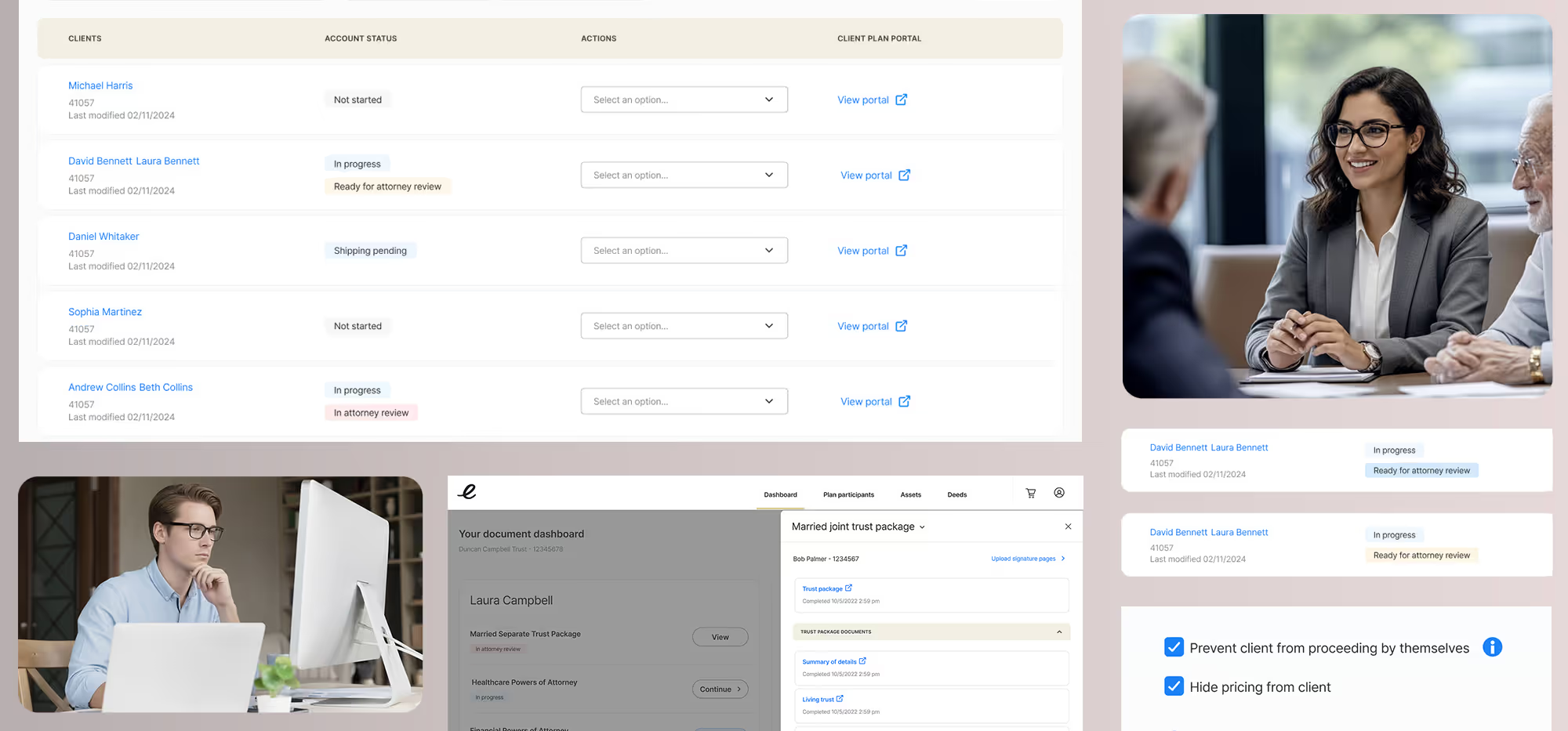
Designing for Advisors, Institutions, and End Clients: Estate Guru
B2B2C complexity becomes most visible in regulated, high-stakes environments.
At Estate Guru, the platform needed to support:
- Advisors managing client relationships
- Institutional partners with compliance requirements
- End clients and beneficiaries navigating sensitive decisions
Each audience had different goals, mental models, and constraints. All of them depended on the same underlying workflows, data, and legal outcomes.
The product did not succeed by splitting into separate experiences. It succeeded by enforcing system coherence.
What worked:
- Shared foundations across all roles
- Role-based variation layered on top of consistent patterns
- Common language and interaction models
- Design decisions evaluated through system impact, not audience silos
This approach reduced errors, increased speed and consistency across design and development, and made it easier to scale new features without fragmenting the experience.
B2B2C products succeed when complexity is treated as a system problem, not a segmentation problem.
You can see how this was handled in the Estate Guru case study
B2B2C complexity exposes weak systems faster than scale alone
Serving multiple audiences reveals whether foundations are strong or improvised.
Where AI Helps, and Where It Cannot
AI is already affecting how teams manage multi-audience products, but it does not change the underlying challenge.
Used correctly, AI can help teams:
- Surface inconsistencies across role-based experiences
- Accelerate documentation, usage guidance, and migration support
- Assist with QA and validation across complex user paths
AI cannot:
- Decide which audience takes priority
- Resolve conflicting incentives
- Replace product principles or governance
AI increases speed. Multi-model products require clarity. Without strong foundations, AI simply accelerates fragmentation.
AI increases speed. Principles protect coherence.
Automation amplifies whatever system already exists.
Frameworks Are the Only Sustainable Solution
Serving multiple business models requires an intentional decision framework.
That includes:
- Clear product principles
- Explicit decision ownership
- Shared success metrics across audiences
- Defined tradeoff frameworks
Frameworks do not slow teams down. It prevents repeated debate and inconsistent outcomes.
Products that lack governance eventually default to fragmentation, even with strong design systems and mature teams.
How to Tell If Your Product Is Fracturing
Early warning signs are often visible before users complain.
Signals include:
- Teams describe the product differently
- Similar tasks behave differently across roles
- Users experience inconsistent trust and clarity
- Audience priority is debated repeatedly
- Design systems struggle to support variation
These are system signals, not visual nitpicks.
What Actually Works Across Business Models
Products that handle B2B, B2C, and B2B2C complexity well tend to share the same traits:
- Shared foundations before specialization
- Role-based variation instead of UX forks
- Consistent language and mental models
- Governance that enforces coherence
- UX maturity that supports tradeoffs
Complexity cannot be removed. It must be designed.
Practical Takeaways
- Treat multi-audience design as a system challenge
- Establish shared foundations before adding variation
- Fix decision making before expanding experiences
- Use complexity to test maturity, not avoid it
Complexity Is a Design Responsibility
Products that serve multiple audiences expose organizational truth quickly.
Teams that invest in system coherence gain leverage as complexity grows. Teams that avoid it accumulate risk through fragmentation and rework.
Designing for B2B, B2C, and B2B2C is not about choosing sides. It is about building products that remain coherent under pressure.
Let's talk
Whether you’re exploring a new product, refining an experience, or interested in me becoming more permanently involved in your endevor, I’d love to connect. I bring experience across industries, mediums, and technologies, and I enjoy helping teams and individuals think through their most interesting design challenges.
Selected work
Flowbird: UX Maturity
Estate Guru: Modernizing Estate Planning
Kiru: A Payroll Startup

PayPal: Unified Card System
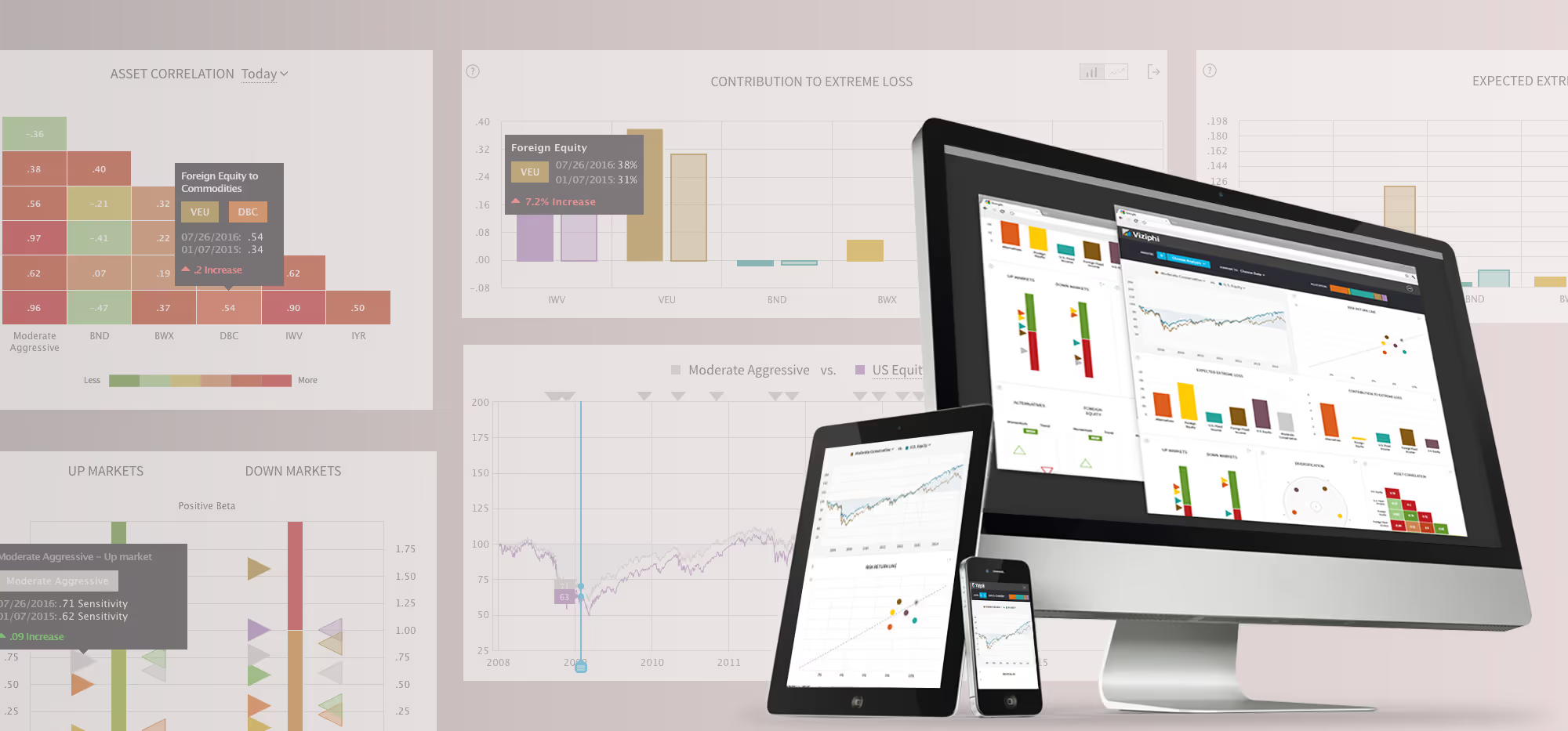
Viziphi: Visualizing Wealth
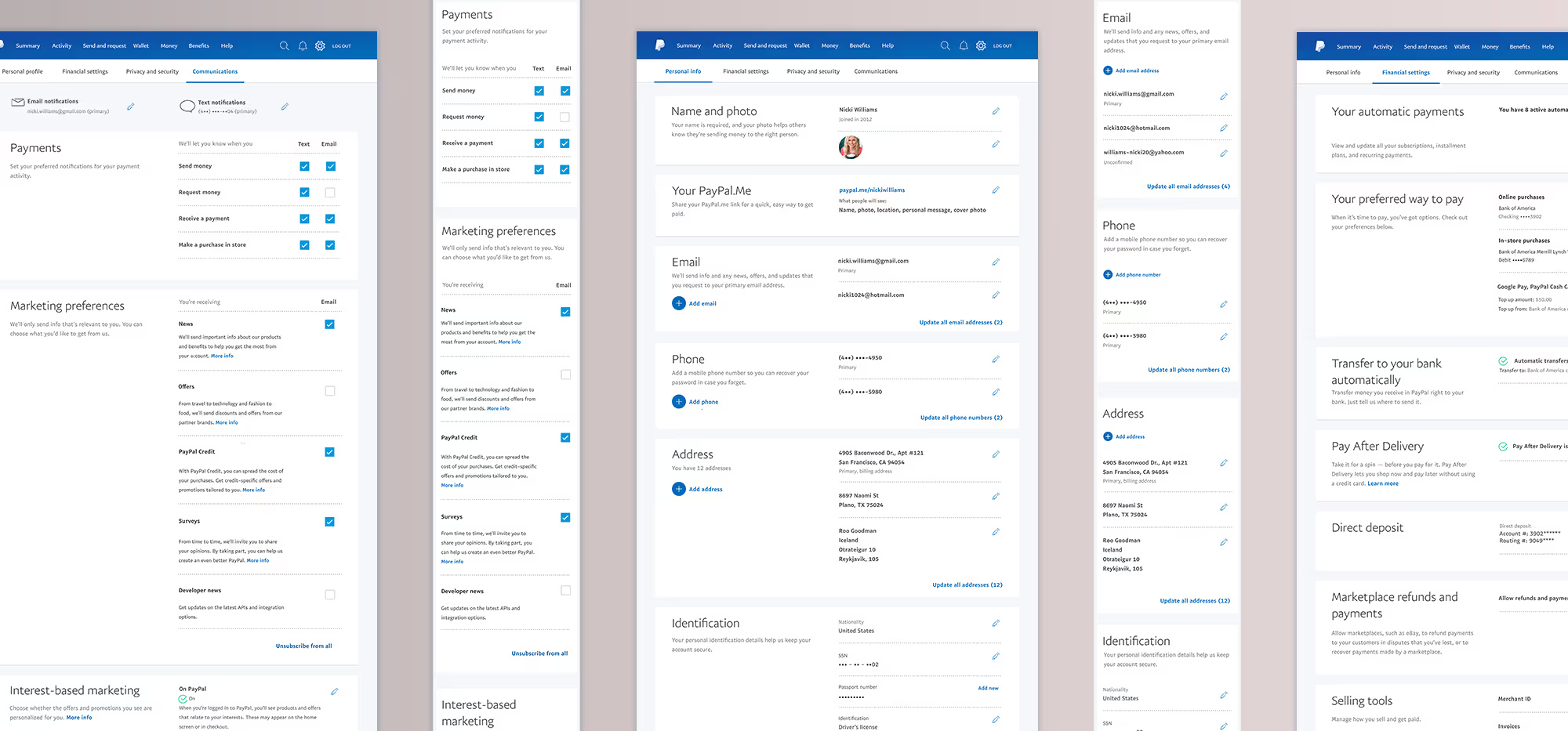
PayPal: Settings Redesign
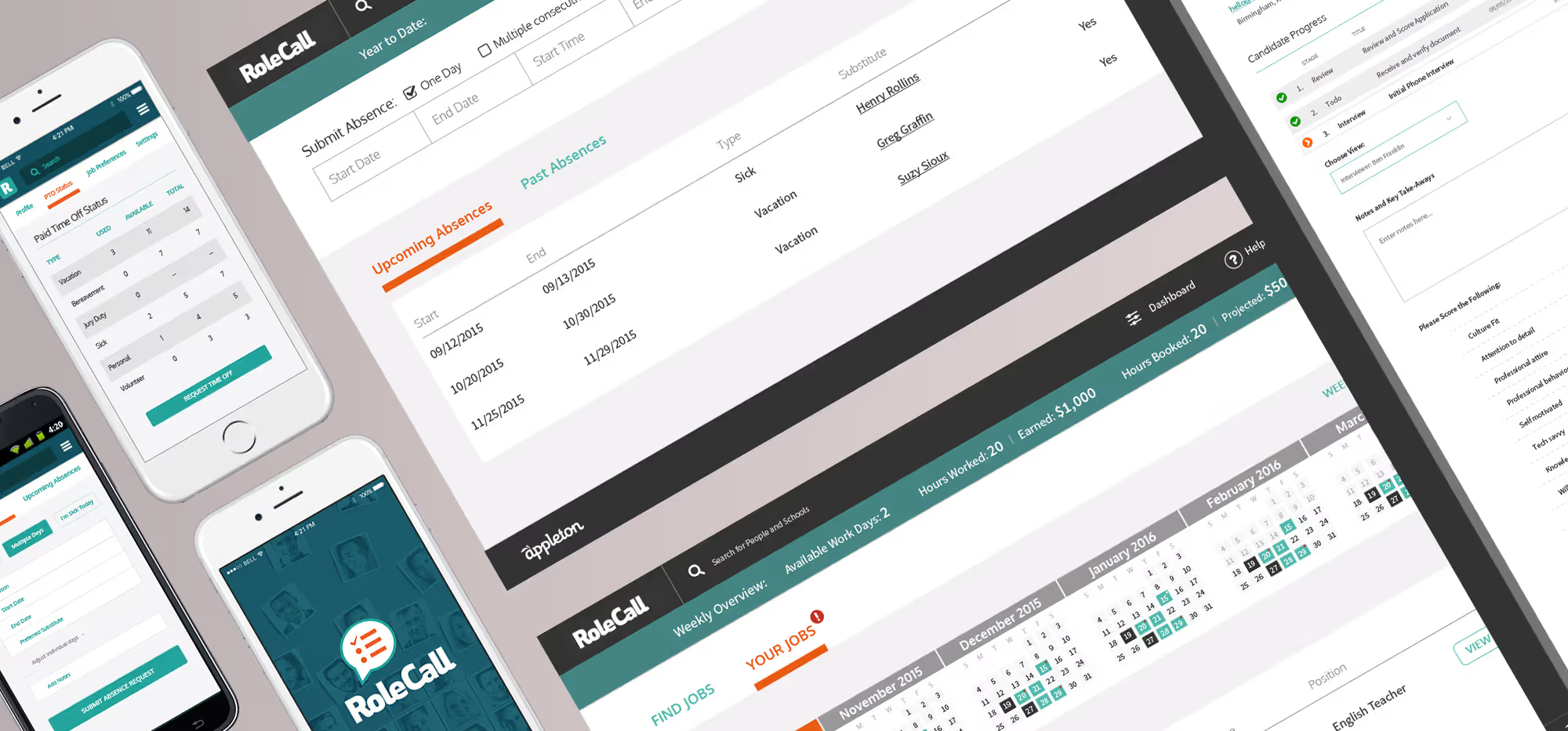
RoleCall: A Platform for K-12 Staffing
