Why UX Becomes a Growth Lever Only After Maturity
The UX Growth Myth
A common assumption is that better UX automatically leads to growth.
In reality, surface-level improvements tend to produce diminishing returns. Once obvious friction is removed, additional gains become harder and more expensive to achieve. At that point, growth depends less on isolated improvements and more on how decisions are made across the organization.
UX creates growth by improving experiences. It also creates growth by reducing the cost and risk of making decisions at scale.
This second contribution is often overlooked, yet it is where mature UX delivers its greatest leverage.
UX creates growth only when it is embedded in how decisions are made.
What UX Maturity Actually Enables
UX maturity is not about polish or process. It is about capability.
Mature UX enables organizations to:
- Make decisions faster with less rework
- Reduce friction across complex journeys
- Prioritize growth opportunities more effectively
- Maintain consistency across channels and touchpoints
- Lower the cost of change as products evolve
These are not design outputs. They are organizational advantages.
When UX maturity is low, growth initiatives carry higher risk. Decisions are revisited late. Assumptions go untested. Teams debate instead of learning. Costs accumulate quietly.
When UX maturity is high, growth becomes cheaper and more predictable.
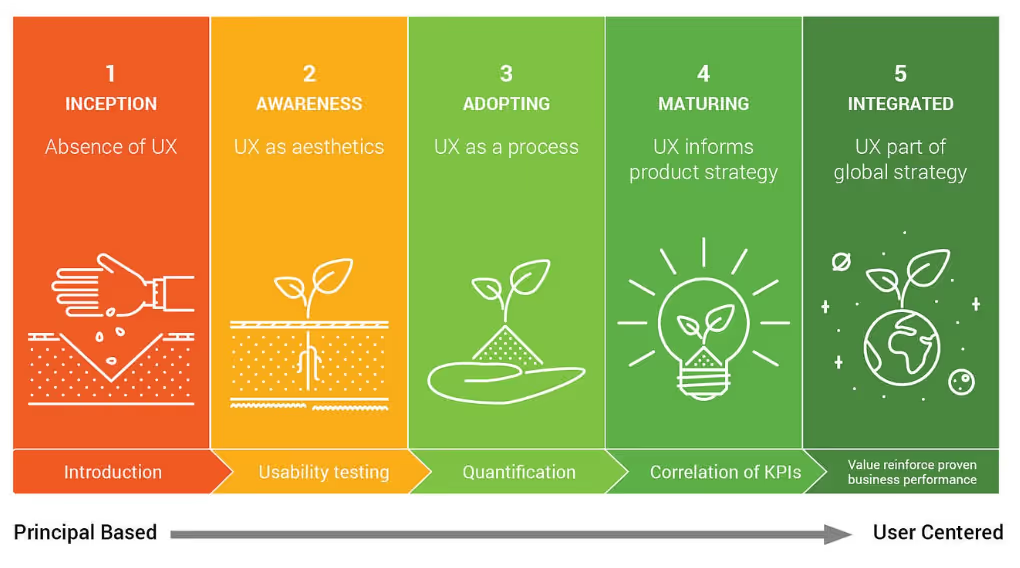
UX Maturity Across Company Stages
At every stage, organizations pursue growth. What changes is how UX supports it.
Early Stage and Startup
Primary focus
Learning and validation.
UX helps teams get real product in front of users quickly and reduce friction to insight. Speed is created through tight feedback loops and clear ownership.
Risk
Treating UX as polish rather than learning infrastructure.
UX maturity changes what growth even means at each stage.
Growth Stage Companies
Primary focus
Conversion, retention, and expansion.
UX clarifies journeys, reduces drop off, and surfaces scalable opportunities. Maturity begins to matter as decisions compound and tradeoffs increase.
Risk
Scaling features without scaling clarity.
Enterprise Organizations
Primary focus
Efficiency, differentiation, and risk management.
UX aligns teams around shared outcomes, reduces operational drag, and protects trust across portfolios.
Risk
Fragmented experiences that undermine brand and confidence.
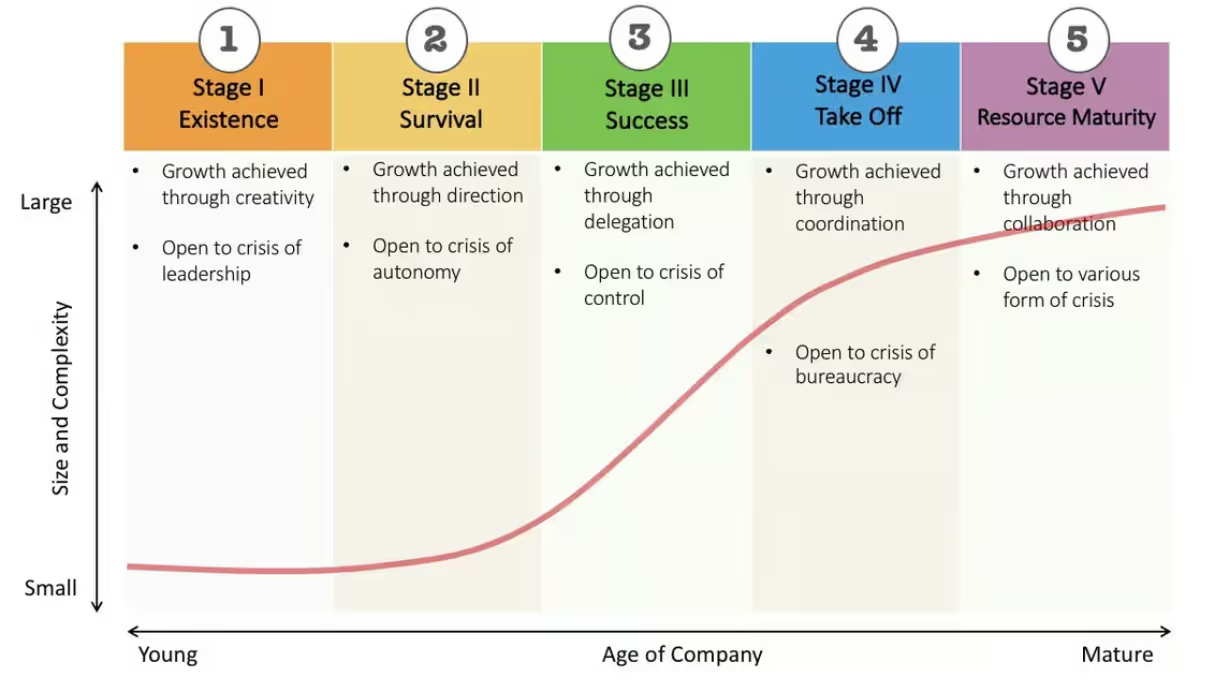
When UX Maturity Unlocks Growth
The connection between UX maturity and growth becomes clearest in complex environments.
At Flowbird, UX maturity shifted design from delivery support to strategic influence. As teams aligned around shared outcomes, decision quality improved across products and regions. Growth initiatives became easier to evaluate, prioritize, and execute because UX reduced ambiguity rather than reacting to it.
At Estate Guru, UX maturity supported trust, conversion, and scalability in a regulated domain. By reducing friction and uncertainty in complex workflows, growth became sustainable instead of reactive. UX made decisions safer and less expensive to change.
In both cases, growth followed maturity. It did not precede it.

Why UX Maturity Is a Revenue Conversation
UX maturity affects revenue indirectly but materially.
It contributes to:
- Higher conversion and retention
- Lower support and operational costs
- Increased pricing power through trust
- Reduced churn caused by confusion or friction
These effects compound over time. Mature UX reduces the cost of growth rather than simply increasing top line metrics.
Where AI Fits in Growth Driven UX
AI can strengthen UX driven growth when maturity already exists.
AI can help teams:
- Accelerate insight generation
- Surface behavioral patterns at scale
- Reduce manual research overhead
AI cannot:
- Define value
- Decide what to optimize
- Replace strategic judgment
AI amplifies existing capability. Without UX maturity, it increases noise rather than leverage.
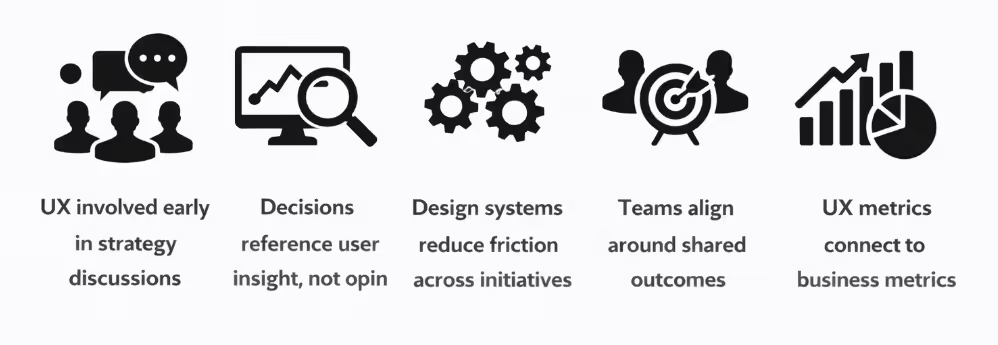
Signals UX Is Ready to Drive Growth
Organizations are ready to use UX as a growth lever when:
- UX is involved early in strategy discussions
- Decisions reference user insight, not opinion
- Design systems reduce friction across initiatives
- Teams align around shared outcomes
- UX metrics connect to business metrics
These signals indicate that UX is reducing decision cost and risk.
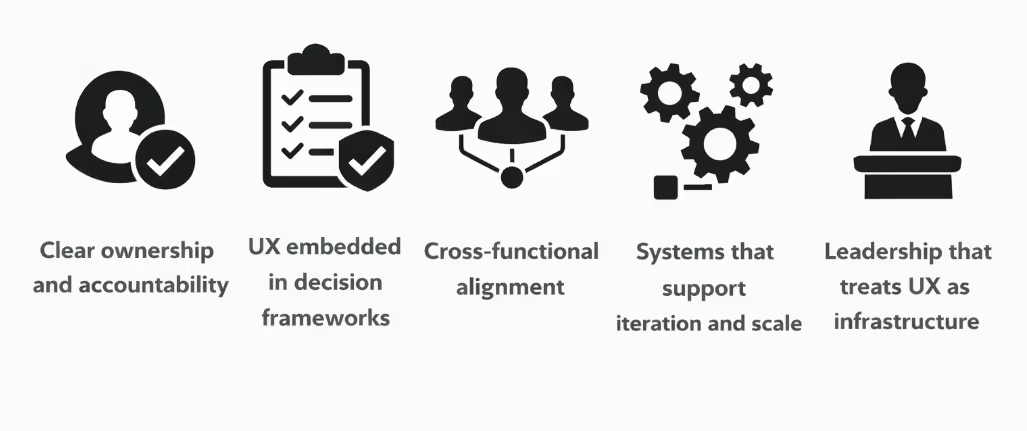
What Actually Works When UX Drives Growth
Growth driven by UX maturity is enabled by:
- Clear ownership and accountability
- UX embedded in decision frameworks
- Cross functional alignment
- Systems that support iteration and scale
- Leadership that treats UX as infrastructure
Growth is not driven by better screens. It is driven by better decisions, made consistently, at scale.
UX as a Compounding Advantage
UX maturity compounds over time.
Organizations that invest early create leverage that competitors struggle to replicate. As products and teams grow more complex, mature UX reduces risk, lowers cost, and increases confidence in decision making.
UX becomes a growth lever not because experiences improve, but because decisions do.
Let's talk
Whether you’re exploring a new product, refining an experience, or interested in me becoming more permanently involved in your endevor, I’d love to connect. I bring experience across industries, mediums, and technologies, and I enjoy helping teams and individuals think through their most interesting design challenges.
Selected work
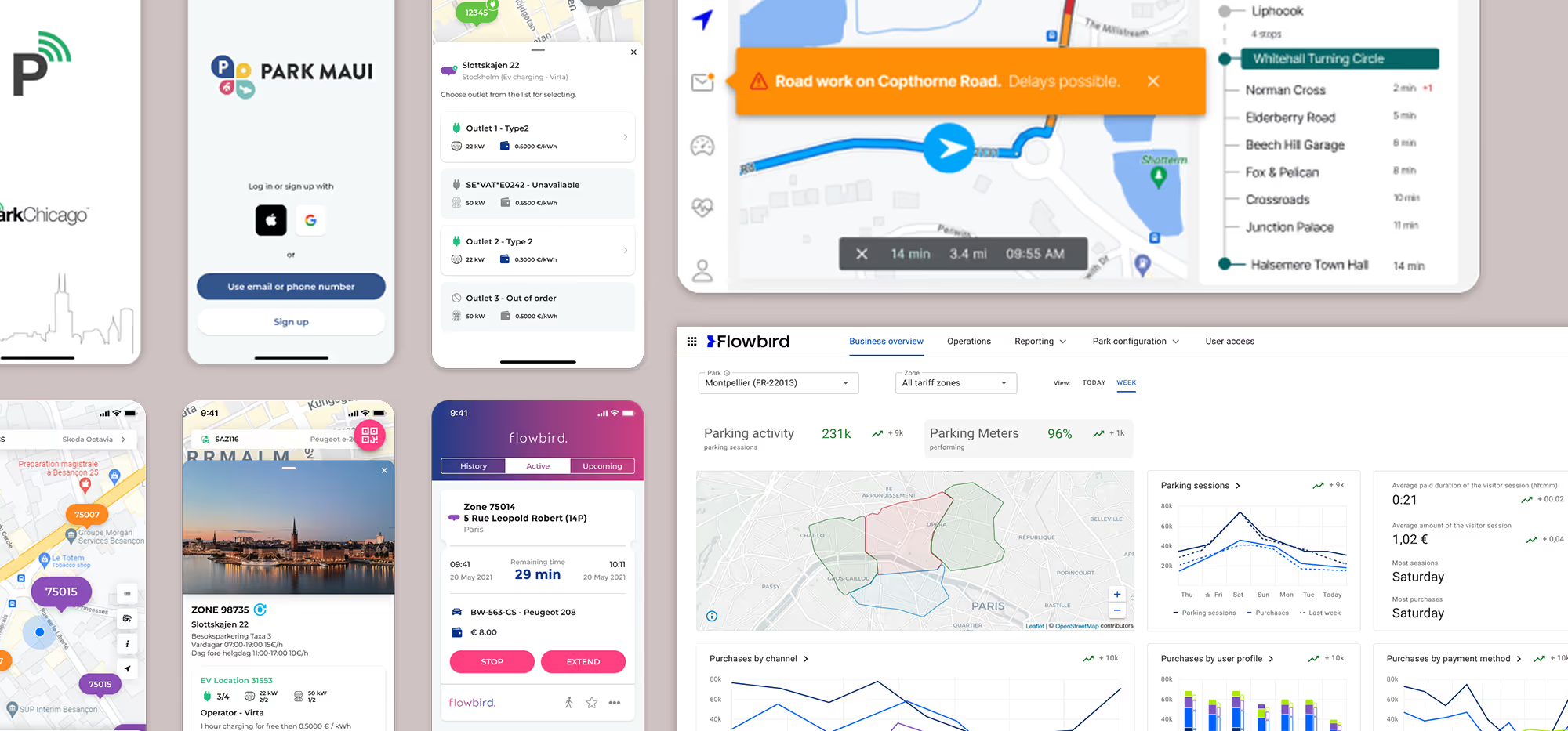
Flowbird: UX Maturity

Estate Guru: Modernizing Estate Planning
Kiru: A Payroll Startup

PayPal: Unified Card System
Viziphi: Visualizing Wealth
PayPal: Settings Redesign
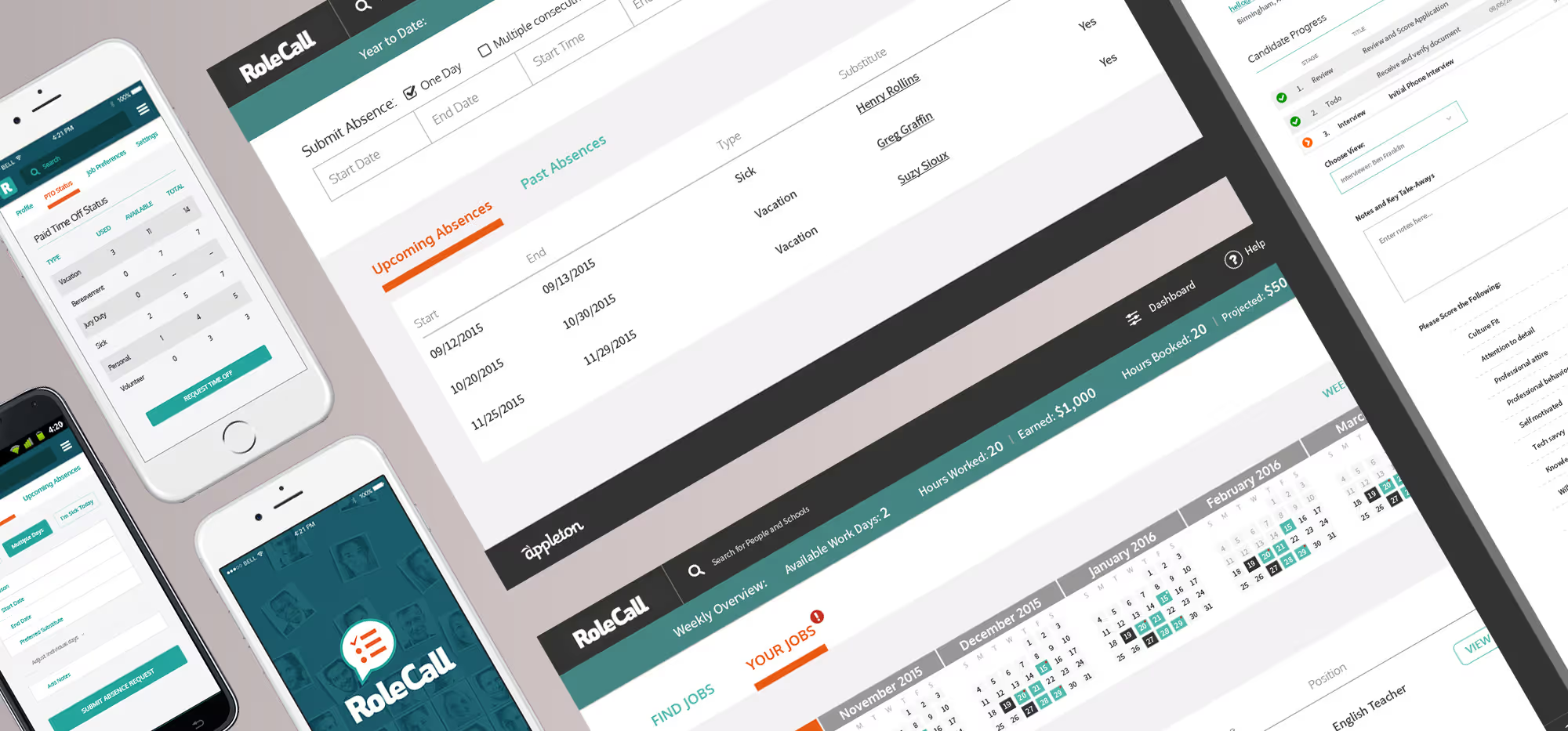
RoleCall: A Platform for K-12 Staffing
